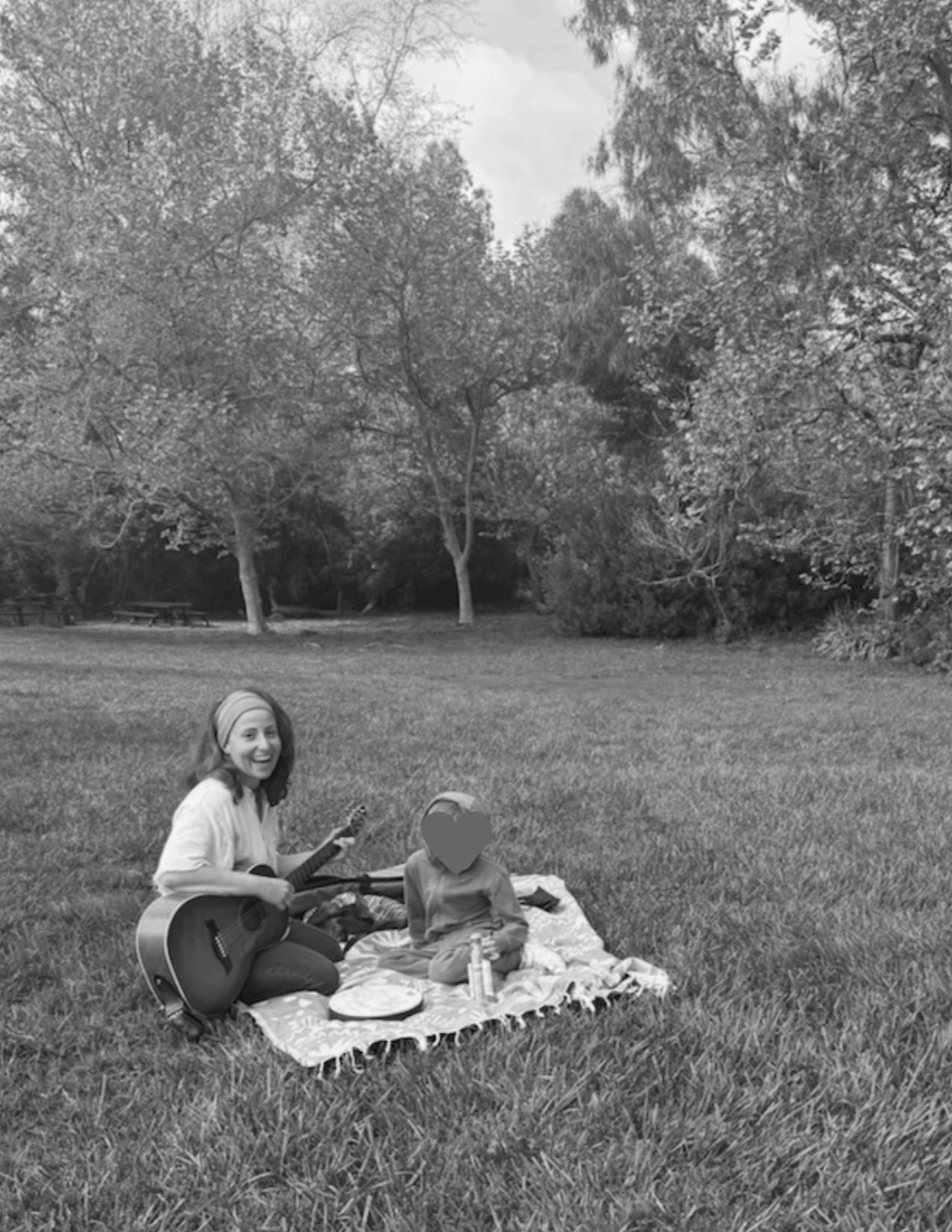
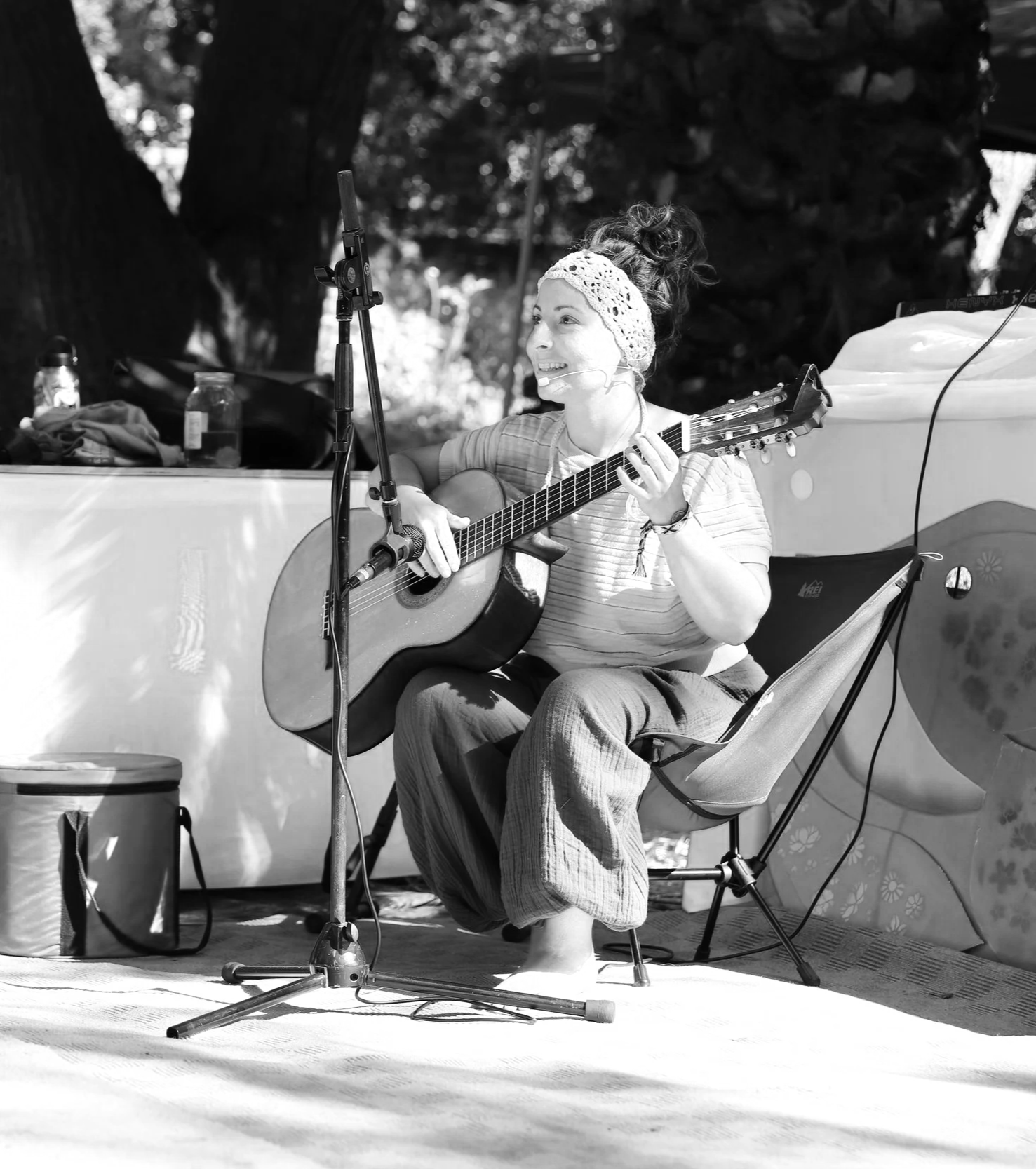
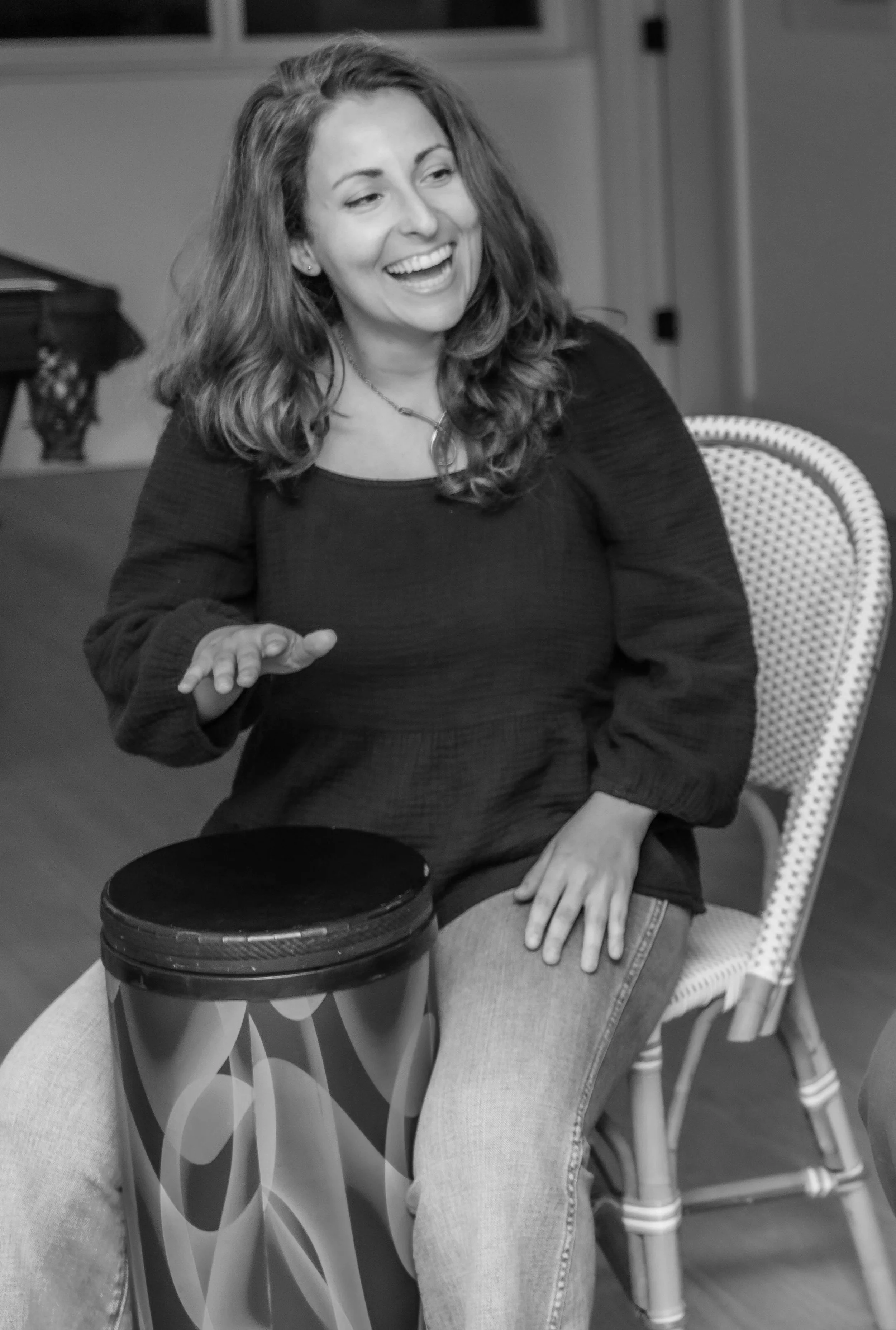
Hi, I’m Nicki
« music tells a truth »
« music tells a truth »
Ever since I can remember, music has been my safe haven and means of expression.
From singing into my Rugrats karaoke machine at age 5 to music classes in Elementary school, playing flute in band, teaching myself my favorite songs on the standup piano in my house (only when no one was home), to learning guitar, music production and DJing in my young adulthood; music. directs. my. life.
At the same time, I grew up with a keen and curious mind wondering what makes humans tick… why do we do what we do? And what’s encouraging that behavior? Thankfully a mentor in my life saw me and my curiosities, pointed me towards music therapy as a profession and the rest is…well, read on!
My love for music’s effect on the brain led me to pursue a B.A. in Music and B.A. in Psychology, a M.S. in Music Therapy, which qualified me to sit for a board exam and became a Board-Certified Music Therapist (MT-BC). After 7+ years, this work continually shapes my worldview, relational techniques, and clinical perspective in a way no traditional therapist training or desk job can provide.
What is Music Therapy?
You might think to yourself, “I do music therapy everyday when I listen to my favorite songs.”
Music Therapy is not just ‘entertainment’.
It’s not just ‘teaching music lessons’
There is a difference between therapeutic music and Music Therapy facilitated by a board-certified, trained professional.
Music Therapy is the strategic creation of a musical container to bring self-awareness and progress towards improving domains and reaching client-led goals. We use the immersion in music to unveil the inner landscape of human behavior, beliefs, and emotions.
Music Therapists are trained to track multiple layers of human behavior in real time by facilitating groups while reading nonverbal cues, emotional shifts, and relational dynamics, all while playing and conducting music.
This means I’m continuously adapting and responding to the living ecosystem of the room while participating in it.
Why music therapy vs traditional therapy?
Playing music utilizes the entire brain simultaneously, strengthening and reinforcing underused and forgotten pathways
Parietal lobe - (spatial awareness) playing instruments
Occipital lobe - (visual mapping) reading music
Broca’s area - (language/speech) reading lyrics and words
Frontal lobe & Cerebellum - (motor cortex) timing, playing instruments, processing rhythm
Auditory cortex - (sound processing) pitch, sound localization
Amygdala - (emotions) metering if the music makes you feel safe
Nucleus Accumbens (dopamine release) - pattern achievement
Settings I’ve worked in (with domains and goals)
Behavioral Health Unit (Acute Psychiatric Inpatient)
Reality orientation, stabilizing emotions, fostering self-expression, reducing anxiety and agitation, and improving social interaction
Memory Care and Assisted Living Facilities (Dementia + Alzheimer’s)
Enhance quality of life, reduce agitation, recall memories, and foster communication
Hospice (End of life/Terminal Prognosis Care)
Reducing pain, anxiety, agitation, fostering life-review and emotional expression, providing family bonding and support, alleviating isolation, provide comfort during the death process.
Day Treatment for Substance Use and Mental Health with Teens and Adults
strengthen coping skills, increase motivation, improve cognitive functioning, reduce anxiety/depression, facilitate emotional expression, and improve social functioning
K-12 Special Education with IEP (Individualized Education Program)
Support musical and non-musical goals by improving communication, social skills, academic engagement, behavioral regulation, and motor skills